

Short answer: a productive baseball offseason runs in phases — a short reset that restores movement quality after the season, a general strength block built on squats, hinges, presses, pulls and carries, a conversion block that turns that strength into force and speed, and a final phase that re-integrates throwing and hitting volume alongside the lifting. Youth athletes and advanced players move through the same logic at very different doses. What wastes a winter is skipping the sequence — showing up in January to max out, or swinging year-round and lifting never.
The offseason is the only stretch of the year when a player can chase physical development without a game on Friday deciding the week. In-season, the job is maintaining. October through January is when the engine actually gets bigger — and the players who treat it that way show up in spring as noticeably different athletes.
Phase 1: reset and movement quality (2–4 weeks)
The first weeks after a long season aren't for loading — they're for taking inventory. A season of throwing and rotating in one direction leaves predictable tightness and side-to-side differences, and stacking heavy training on top of those patterns just reinforces them. This phase looks unglamorous on purpose: full-range bodyweight and light-load work, re-learning positions — a clean hinge, a full-depth squat, controlled rotation — plus easy aerobic work and, for most players, genuinely stepping away from the bat and ball for a few weeks.
- Re-establish full ranges: deep squats, lunges, hinges and open-up rotational work at easy loads
- Address the season's asymmetries with single-arm and single-leg variations
- Keep moving — easy conditioning, not couch time — so Phase 2 doesn't start from zero
- Take an actual break from high-volume throwing and swinging; the skill comes back fast, the elbow's workload tolerance doesn't need to be tested in October
Phase 2: general strength (the long block)
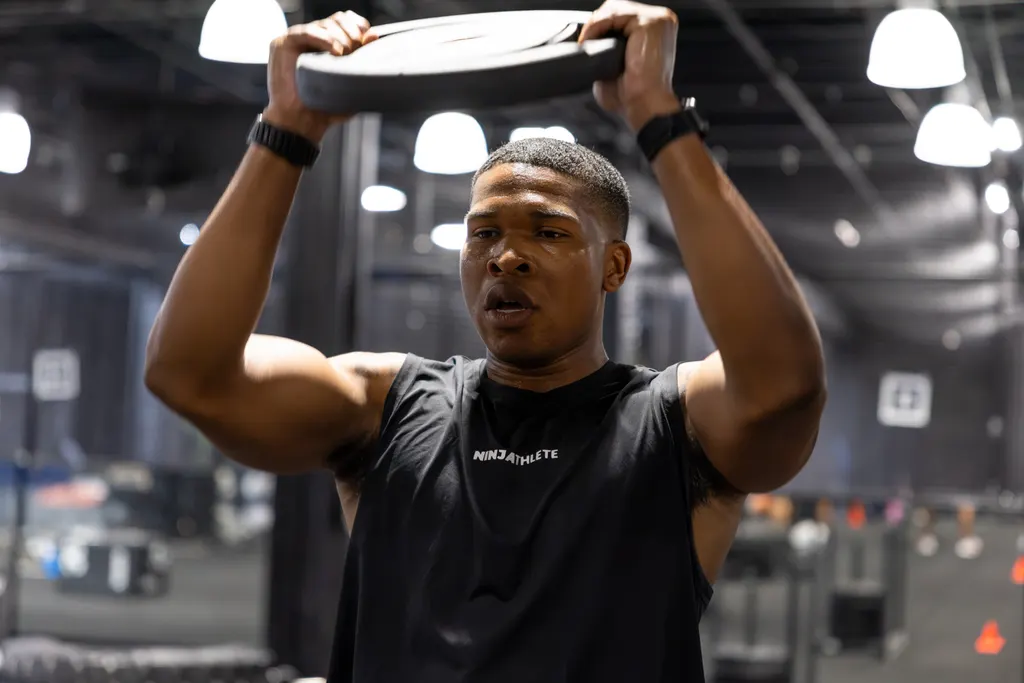
This is the heart of the winter — typically the biggest chunk of the offseason calendar. The work is deliberately ordinary: squat and hinge patterns, horizontal and vertical presses and pulls, loaded carries, and rotational med-ball work woven through it all. Baseball players don't need exotic exercises; they need honest loading on basic patterns, progressed week over week, with trunk and rotational strength treated as a main course rather than a finisher.
- 3–4 lifting days per week works for most players in this phase
- Moderate rep ranges (5–10) on the big patterns, adding load or reps most weeks
- Rotational power groundwork: med-ball scoop and rotational throws, both sides, every week
- Keep sprinting in the plan at low doses — speed maintained is far cheaper than speed rebuilt
Phase 3: force to power
Strength that stays slow doesn't show up on a field. Once a base is built, the emphasis shifts from how much to how fast: the bar moves with intent, jumps and bounds enter the program, med-ball throws get more aggressive, and sprint work becomes a priority rather than a warm-up. Loads drop a touch so speed can climb. This is also where the weight room starts explicitly serving the swing and the throw — force produced from the ground, transferred through the trunk, expressed through the hands.
- Pair strength work with jumps and throws — lift heavy, then move light things violently
- Sprint short and fresh: 10–30 m efforts with full recovery, quality over volume
- Med-ball work gets measured by intent now — throw hard, rest, repeat
- Strength doesn't disappear; it just stops being the headline
Phase 4: speed and re-integration
The final phase solves the problem most offseasons fumble: blending the gym back into baseball. Throwing programs ramp progressively, hitting volume climbs, and the lifting adjusts around them — total floor volume comes down, intensity stays, and the schedule starts respecting that the bat and the ball are the point. Players training where the cage and the weight floor share a building have a real advantage here, because the strength coach and the skill work stop living on different planets. At DPS, the cages and the performance floor are literally one roof — a measured swing session and a lift happen in the same visit.
Youth players vs. advanced athletes: same logic, different dose
How the same offseason logic scales by training age
| Youth (roughly 8–13) | High school and beyond | |
|---|---|---|
| Main goal | Movement skills, coordination, general athleticism | Measurable strength, power and speed development |
| Loading | Bodyweight, light implements, learning positions | Progressive barbell and dumbbell loading |
| Sprint/jump work | Games, relays, varied movement — fun is the program | Programmed sprints, jumps and med-ball power work |
| Baseball volume | Multiple sports encouraged; low structured volume | Structured throwing/hitting ramps in Phase 4 |
| The win | A better all-around athlete who loves training | A bigger engine that survives a long season |
For young athletes, the offseason barely needs to look like baseball at all — speed, agility and general athletic work beats early specialization, and the strength that matters is learning to move well before loading. For high school, college and pro players, the winter is a measurable campaign: baseline numbers in November should not be the same numbers in February. That's also the population where coaching earns its cost — progression, exercise selection and workload decisions stop being generic.
The mistakes that waste a winter
- Skipping Phase 1 and loading a season's worth of tightness — the gains stall by December
- Swinging five days a week all winter and calling it development — skill without a bigger engine plateaus
- Maxing out in January because a number sounds good — the season rewards force you can repeat, not a one-rep story
- Dropping sprint work entirely — baseball is still a sprint sport, and speed is the hardest quality to win back
- Training the gym and the skill in two unconnected silos with no one comparing notes
Build your winter under one roof
Strength floor, cages and coaches in the same building — the free trial includes a tour and one free cage session.
Frequently asked questions
When should a baseball player start offseason training?
As soon as the season ends — but with the reset phase, not heavy loading. Two to four weeks of movement-quality work, easy conditioning and a genuine break from high-volume throwing sets up the strength blocks that follow. Starting the heavy work in January leaves most of the winter's potential on the table.
Should youth players lift weights in the offseason?
Youth athletes benefit most from learning movement first — bodyweight strength, light implements, sprinting, jumping and multi-sport play. Supervised, well-coached loading can be appropriate as players mature, but for most 8–13-year-olds the winning offseason builds general athleticism rather than chasing barbell numbers.
How many days a week should I train in the offseason?
Three to four floor sessions per week covers most players in the strength phases, with sprint and med-ball work folded in. In the re-integration phase, total volume drops as throwing and hitting climb — the mistake is keeping January's gym volume while adding February's baseball volume on top.
Should I keep hitting and throwing all offseason?
Most players benefit from a few genuinely off weeks after the season, a long stretch where the gym is the priority and skill work is reduced, and then a progressive ramp back. Skill returns quickly; the window to meaningfully change strength, speed and power is the part of the calendar you can't get back.
How does offseason training work at DPS?
The building holds both halves: a full strength and performance floor, and the cages with TrackMan and Rapsodo data for the skill side. One-on-one programming is available through personal training, baseball lessons are booked per coach, and the free trial includes a tour plus one free cage session — no card required.
Spring is built in the winter
Every February, the players who sequenced their winter — reset, strength, power, integration — walk into tryouts moving differently. Start with the free trial, see the floor and the cages, and if you want the work programmed and coached, personal training and the baseball staff are in the same building, comparing notes.
The offseason is the opportunity.
Strength floor, cages, data and coaches under one roof in Dallas — come see it on a free trial.