
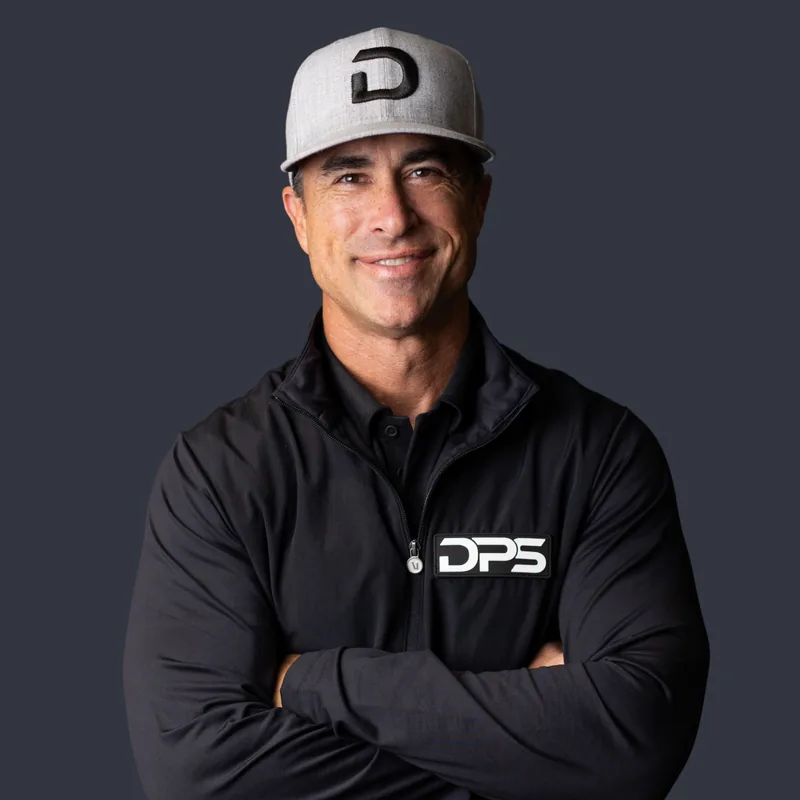
A baseball performance center is a training facility that combines batting cages, objective ball-flight and swing data, position-specific coaching, and a strength and conditioning floor in one building — so a player develops every part of their game in one place. At DPS in Dallas, that means TrackMan-equipped cages, Rapsodo swing data, 25 named coaches and a full performance gym under one roof.
I built DPS because Dallas had plenty of places to swing a bat and plenty of gyms to lift in — and almost nowhere that connected the two. A 14-year-old would hit on Tuesday at one facility, lift on Thursday at another, and nobody coaching either session ever compared notes.
This article explains what a baseball performance center actually is, what equipment and coaching should be inside one, what it costs here in Dallas, and how to decide whether your player needs one — or whether a simple cage rental is honestly enough.
What separates a performance center from a batting cage?
The short answer: measurement and coaching. A batting cage facility rents you a lane and a machine. A performance center wraps that lane in three things — objective data on every swing or pitch, a coach who can read that data, and a strength program that fixes what the data exposes. The reps look the same from the parking lot. What happens to the player over six months doesn't.
That's not a knock on cage time. We rent batting cages by the half hour to anyone, no membership required, and plain reps have their place. The difference is what happens when a swing plateaus. In a rental cage, a plateau looks like bad luck. On a TrackMan screen, it has a cause — attack angle, exit velocity, contact point — and a cause has a fix.
What's inside DPS Dallas
- Three TrackMan units — the same ball-flight tracking system MLB organizations use for exit velocity, launch angle and pitch data
- Rapsodo swing and pitch data for lesson work (here's what that data actually tells you)
- Trajekt Arc pitching robot — coming soon, the machine MLB hitters use to face real arsenals
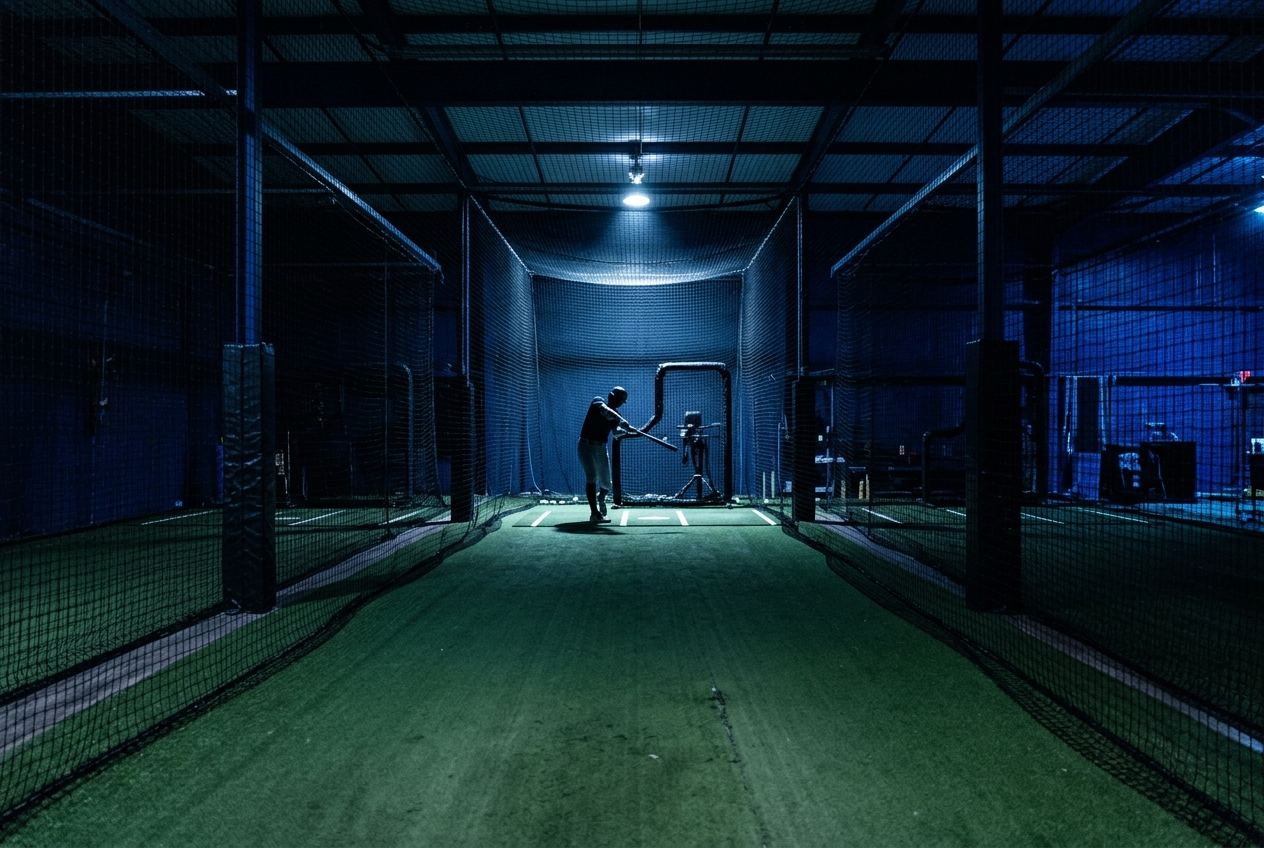
- Indoor cage bays and a full turf lane for live work, team sessions and team training
- A strength and conditioning floor shared with our fitness side — racks, sleds, turf and recovery
Performance center vs. commercial gym vs. cage rental
What each facility type actually gives a baseball player
| Batting cage facility | Commercial gym | Baseball performance center | |
|---|---|---|---|
| What you get | A lane, a machine, reps | Weights, cardio, open floor | Cages, data, coaching and strength in one plan |
| Swing/pitch data | None | None | TrackMan ball flight + Rapsodo swing metrics |
| Coaching | None, or add-on | General trainers, not baseball-specific | Position coaches — hitting, pitching, catching, fielding |
| Strength work | No | Yes, but generic programming | Baseball-specific programming by CSCS coaches |
| Best for | Extra reps between lessons | General fitness | Players who want measurable development |
The coaching difference: 25 named coaches, including MLB players
Equipment is the easy part — any facility can buy a TrackMan. The harder thing to assemble is a staff. DPS runs 25 named coaches, each with a public profile, and the baseball side is led by players who've been where your player is trying to go: Delino DeShields Jr., a first-round pick who played seven MLB seasons in center field; TJ Rumfield, the current Colorado Rockies starting first baseman who trains hitters here in the offseason; and Chad Allen, a seven-season MLB outfielder and Olympic bronze medalist who spent nearly a decade as a hitting coach in the Twins and Cubs organizations.
The most common gap we see with Dallas players walking in for a first evaluation isn't effort — it's that nobody has ever shown them a number. They've taken years of lessons and can't say what their exit velocity is, whether it's trending, or what their swing does under fatigue. The first TrackMan session usually answers questions a family has been guessing at for two seasons.
See the facility before you commit to anything
The free trial includes a tour and one free cage session — no card required.
What does a baseball performance center cost in Dallas?
At DPS, you can start at three levels, and none of them require a membership to walk in the door:
- Cage rentals start at $50 per 30 minutes — no membership, book online
- Private lessons are priced per coach and booked directly on each coach's calendar
- Fitness memberships run $130/month for unlimited classes on the strength side
- The free trial is a 3-day pass with a tour and one free cage session — no card required
Who actually needs one (and who doesn't)
Honest answer: not everyone. If your 9-year-old loves the game and wants swings, a cage rental and a patient parent are a great start. A performance center earns its cost when development starts to matter — a youth player getting serious, a high schooler chasing a varsity spot or college looks, or a college and pro player who needs offseason work that holds up to in-season demands. The signal to upgrade is simple: when you start asking 'is this working?', you need a facility that can answer with data instead of a shrug.
Where we are in Dallas
DPS sits at 2651 Fondren Dr, Ste. B, Dallas, TX 75206 — a few minutes from SMU. Open Monday–Thursday 5 AM–9 PM, Friday 5 AM–7 PM, Saturday 9 AM–5 PM, Sunday 12–5 PM. Call (214) 393-3377 or see the Dallas location page for parking and directions.
Frequently asked questions
What is a baseball performance center?
A baseball performance center is a facility that combines batting cages, objective swing and ball-flight data, position-specific baseball coaching, and strength training in one building. Unlike a cage rental, player development is measured — at DPS that means TrackMan and Rapsodo data attached to coached sessions.
How is it different from private baseball lessons?
Private lessons are one piece of a performance center, not a substitute for one. A lesson covers skill work with a coach; a performance center adds the data layer, the strength floor and the ability to connect all three — your hitting coach and your strength coach work in the same building off the same information.
Do I need a membership to use DPS?
No. Cage rentals (from $50 per 30 minutes) and private lessons are open to anyone and booked online. Memberships only apply to the fitness side — unlimited classes run $130/month. The free trial includes a facility tour and one free cage session with no card required.
What ages do you work with?
Youth players through college and professional athletes. Youth programs like speed and agility start around age 8, private baseball lessons are scaled to the player, and the offseason strength side serves high school, college and pro players — including the MLB players who train here.
What is TrackMan and why does it matter?
TrackMan is the ball-flight tracking system used across professional baseball to measure exit velocity, launch angle, spin and pitch movement. It matters because it replaces guesswork: instead of a coach's eye alone, every swing or pitch produces numbers you can compare week over week. DPS runs three units.
Can my team train at DPS?
Yes. Team training sessions run in the cage bays and on the turf lane, with TrackMan data available for hitting groups and strength blocks programmed on the performance floor. Facility rental for teams is also available — contact us for scheduling and rates at (214) 393-3377.
See it before you decide
Reading about a facility only gets you so far. Walk the building, watch a lesson run on TrackMan, and see whether the place fits your player. The free trial is a 3-day pass with a tour and a free cage session — no card, no sales chase. If it's not the right fit, you lost an afternoon and got free swings.
Come see the building.
Tour the cages, the TrackMan setup and the strength floor — free trial, no card required.